
regulations
Filming from the Air in the Nordics: What Certification Actually Requires
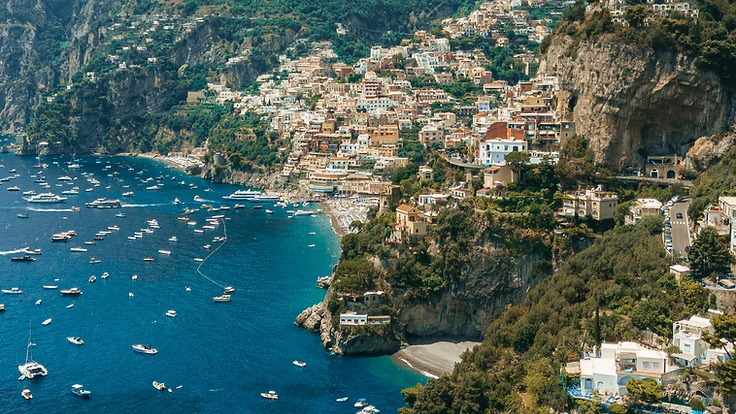
A Copenhagen production company on what EASA certification, operator registration and Nordic airspace rules actually require before anyone films from the air.
Guest post by Roland Varsbergs, Founder & Creative Director, 5 ALIVE MEDIA
Most people who commission aerial footage assume the hard part is flying. It isn't. The hard part is knowing where you're legally allowed to be, what certification the operation actually demands, and how far in advance you need permission — before anyone opens a case.
I run a video production company based in Copenhagen, and drone work has become a standard part of what clients expect: conference venues, product launches, architecture, festival grounds. Over the past few years the regulatory picture across Europe has become much clearer than it used to be, but it's also stricter, and the gap between "I own a drone" and "I can legally film your event" is wider than most clients realise.
Here's what actually governs aerial filming across the Nordic region in 2026, and what to check before you book anyone to fly.
The EASA framework, in plain terms
Since 2021, drone operations across all EU member states have run on a single European Union Aviation Safety Agency (EASA) framework rather than a patchwork of national rules. Operations are sorted into three categories by risk:
- Open — low risk. Drones under 25kg, flown below 120 metres, within visual line of sight. No prior authorisation needed. Most commercial filming sits here.
- Specific — medium risk. Anything beyond Open limits: beyond visual line of sight, above 120 metres, closer to people than Open allows. Requires operational authorisation, a standard scenario (STS), or a Light UAS Operator Certificate (LUC).
- Certified — high risk. Flying over crowds, transporting people. Full aircraft certification territory.
For production work, the practical question is almost always which Open subcategory you're operating in:
- A1 — you may fly over uninvolved people, but never over assemblies of people. Drones under 900g meeting specific technical standards.
- A2 — operations at a safe distance from people: at least 30 metres horizontally, or 5 metres in low-speed mode. Requires an additional certificate of competency.
- A3 — far from people. At least 150 metres from residential, commercial, industrial or recreational areas. This is the catch-all for drones without a class label, including most home-built FPV rigs.
What certification actually involves
Two things are commonly confused: registering as an operator and being certified as a pilot. You need both.
Operator registration is mandatory across the EU for anyone flying a drone with a camera or over 250g. You register with your national aviation authority — in Denmark, that's Trafikstyrelsen — and receive an operator ID that must be displayed on every drone you own. Register once in your first EU country of operation; it's recognised across member states.
Pilot competency comes in two levels. The A1/A3 certificate is a theoretical online exam covering air safety, privacy, insurance and operational procedure — free or low-cost in most member states. The A2 certificate of competency requires a more comprehensive theoretical exam plus a practical self-training declaration, and it's what allows you to work closer to people. Both are valid for five years and are mutually recognised across all EASA member states.
That mutual recognition matters a great deal for how we work. A crew certified in Denmark can operate legally across the EU without recertifying country by country — which is what makes genuinely regional production possible rather than hiring a separate local operator in every market.

Where the Nordics get complicated
The EASA baseline is uniform. National implementation is not, and this is where productions get caught out.
Copenhagen is one of the more restrictive capitals in Europe to fly in. Most of the city centre sits inside Copenhagen Airport's exclusion zone. Built-up-area operations require advance notice and authorisation — not something you arrange on the morning of a shoot. Government buildings, embassies and historical sites carry their own restrictions on top. Denmark also restricts urban flying to professional purposes only, which is unusually specific among EU states and one of the more consequential national rules for anyone working commercially.
The practical upshot: a Copenhagen aerial shot that looks spontaneous almost never is. It's scouted, cleared and scheduled — often days ahead — against the national airspace map. Anyone quoting you drone coverage inside a Nordic city on 24 hours' notice is either working somewhere I haven't found, or hasn't checked.
Beyond the cities, the picture opens up considerably. The Nordic region is unusually well-suited to aerial work: long summer daylight that stretches the usable golden hour far beyond what's possible further south, dramatic coastline, and — outside the urban exclusion zones — large areas that comfortably satisfy A3's 150-metre separation requirement without creative compromise.
What to actually ask before you hire
If you're commissioning aerial footage anywhere in the EU, four questions will tell you almost everything:
- Are you registered as an operator, and in which country? Registration is not optional and takes minutes to verify.
- Which subcategory certificate do you hold — A1/A3, or A2 as well? If your shoot involves people anywhere near the frame, A2 is the relevant one.
- Have you checked the airspace for this specific location? In Denmark, that means the national drone airspace map, not a general assumption about the area.
- Do you carry third-party liability insurance? Required in practice across the EU, and the thing most often missing from cheaper quotes.
If someone can't answer all four quickly, that's your answer.
Why any of this matters for the footage itself
Regulation sounds like paperwork, and mostly it is. But the constraints shape the work in ways worth understanding.
Knowing you're limited to 120 metres changes how you plan a shot — you compose for that ceiling rather than discovering it on the day. Knowing an urban permission takes advance notice means the aerial sequence gets designed into the production schedule from the start, not bolted on. And knowing which subcategory you're cleared for determines, quite literally, how close the camera can get to the people in your film.
The productions that get good aerial footage aren't the ones that fly the most. They're the ones that knew what was possible before anyone arrived on location.
Roland Varsbergs is founder and creative director of 5 ALIVE MEDIA, a Copenhagen-based video and photo production company working across the Nordics and Europe. He holds EU A1/A3 and A2 drone certification and is a registered operator in Denmark. The company's drone and aerial production work covers conferences, launches and brand films across Denmark, Sweden and Finland.
Topics
Now go shopping
See what's listed right now
Every drone is reviewed by our team before it goes live, and your card payment is held in Protected Payments until you've flown it.
Browse drones